

SMTN-003
Trailing Losses for Moving Objects#
Abstract
Trailing losses occur for Solar System objects when their motion during an image results in their detection covering more than the equivalent stellar PSF for that image. This results in a decreased SNR for the moving object compared to a stationary point source. There are two distinct sources of this decreased SNR: if the moving object measurement is done with a trailed PSF that matches the moving object PSF, SNR decreases due to the additional background sky pixels (larger n_effective) in the trailed PSF; if the moving object measurement is done with a point-source PSF that does not match the moving object’s PSF, SNR decreases due to the flux missed outside the point-source PSF.
This technote evaluates trailing losses from both sources and provides a summary formula to calculate each from the moving object’s velocity and the image’s FWHM and exposure time.
Calculations#
Solar system objects move across the image during an exposure. If the movement is significant, the signal to noise ratio of the object decreases compared to an equivalent stationary object.
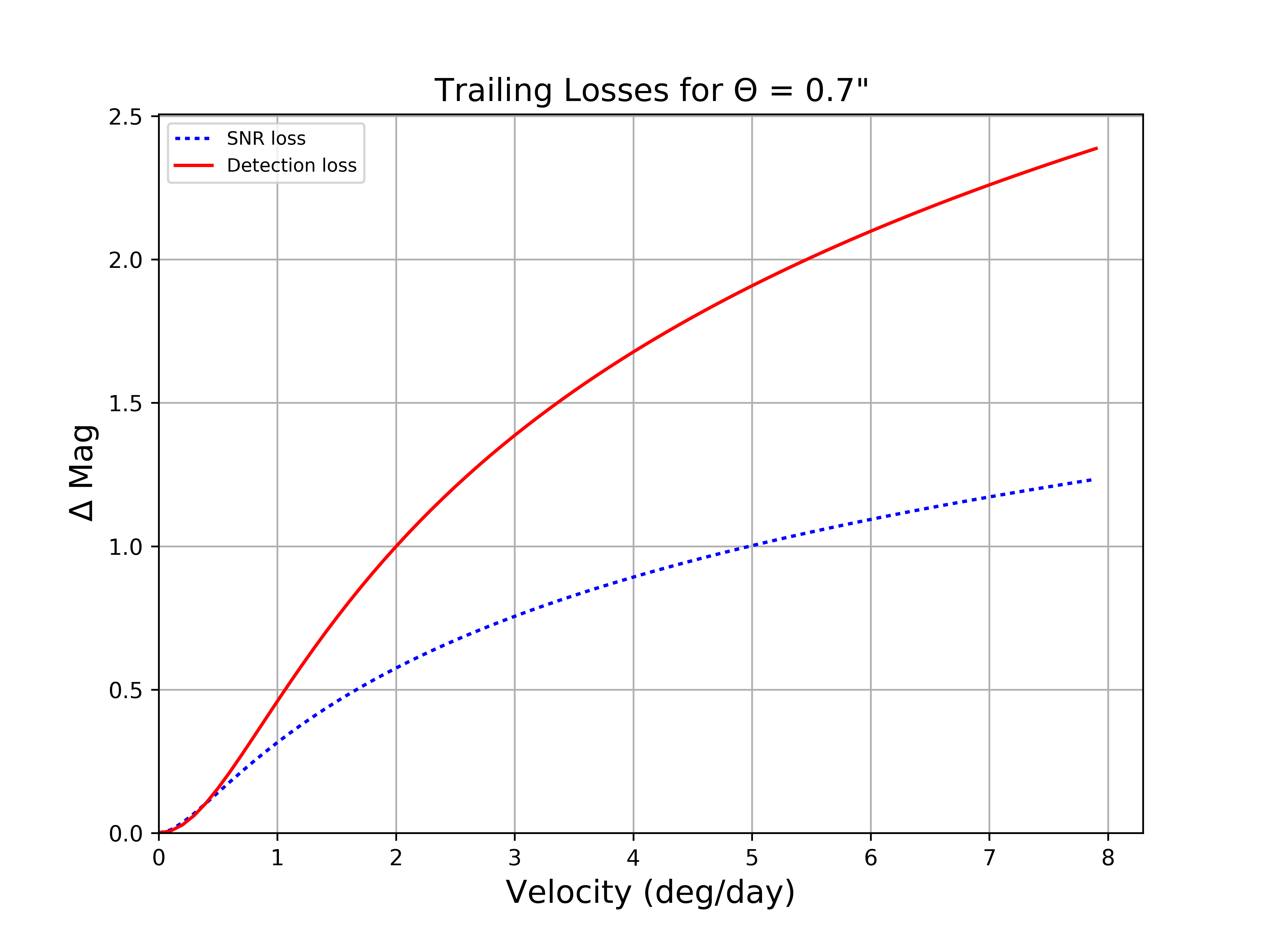
Fig. 1 Trailing losses in 0.7” seeing for 30 second exposures. The blue dotted line (SNR loss) indicates the losses due to simply spreading the light from a moving source over more background pixels. The red line (Detection loss) indicates the losses due to detection algorithms assuming a stellar PSF instead of a trailed PSF. With additional work in the source detection software stage, detection losses can be mitigated to the level of SNR losses.#
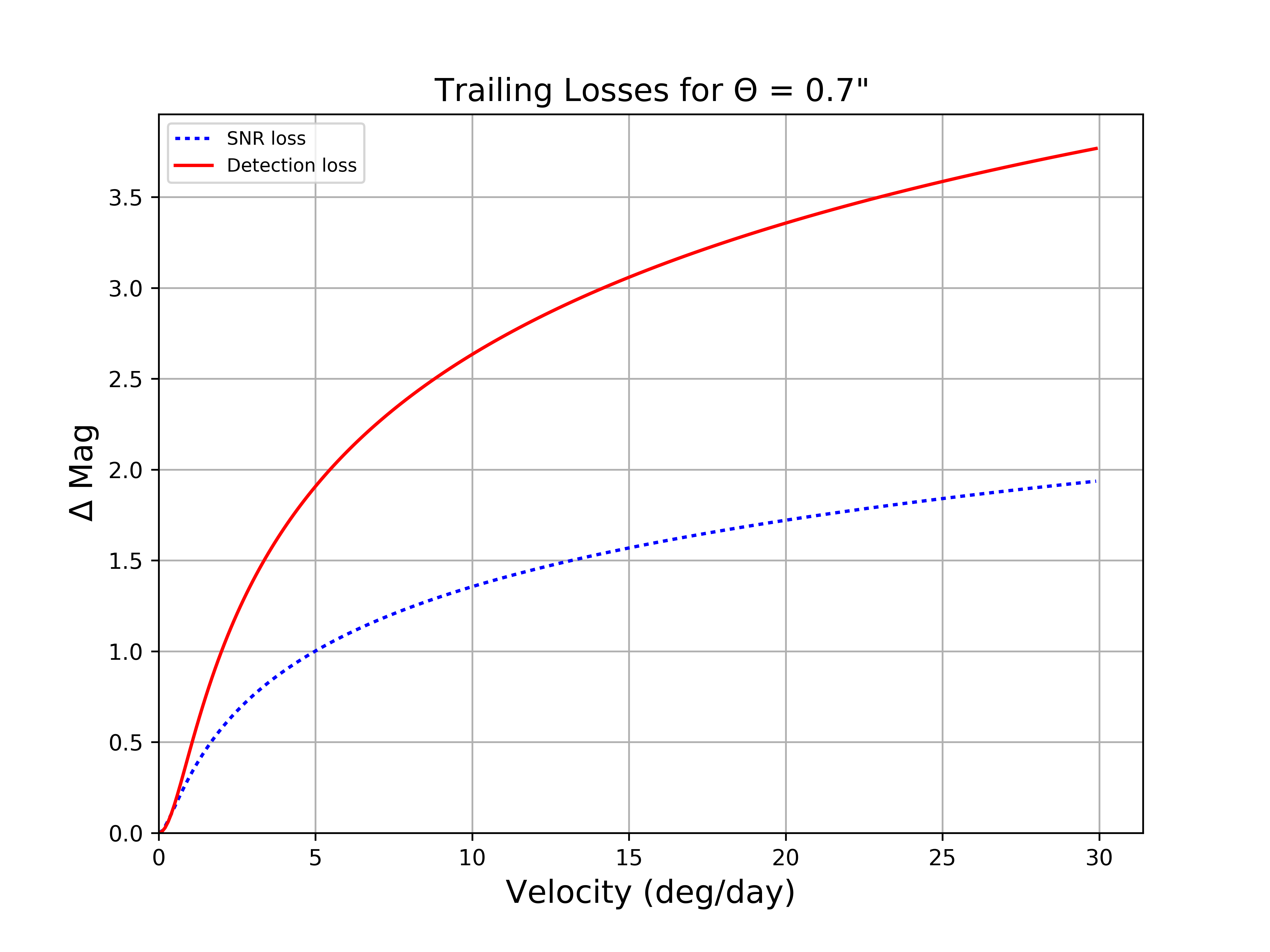
Fig. 2 Trailing losses in 0.7” seeing for 30 second exposures, as above, but with a wider range of velocities.#
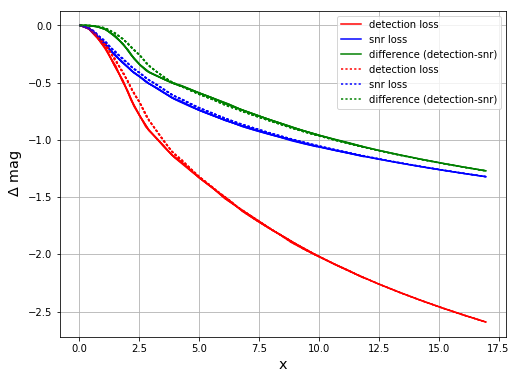
Fig. 3 Trailing losses as a function of “X” = velocity(deg/day) * exposure time(s) / seeing(”) / 24.0.#
def trailing_losses(velocity, seeing, texp=30.):
   """Calculate detection-based and SNR-based trailing losses.

   Parameters
   ==========
   velocity : float
       The velocity of the moving object, in deg/day.
   seeing : float
       The seeing in the image, in arcseconds.
   texp : float, opt
       The exposure time, in seconds.

   Returns
   =======
   dict
       dmag['trail'] and dmag['detect'] - detection and SNR losses.
   """
   a_trail = 0.761
   b_trail = 1.162
   a_det = 0.420
   b_det = 0.003
   x = velocity * texp / seeing / 24.0
   dmag = {}
   dmag['trail'] = 1.25 * np.log10(1 + a_trail*x**2/(1+b_trail*x))
   dmag['detect'] = 1.25 * np.log10(1 + a_det*x**2 / (1+b_det*x))
   return dmag